Ask a newcomer to read a Southern cafeteria line and the proteins make sense instantly. The sides are where people stall: black-eyed peas, pickled beets, broccoli casserole, fried okra, squash casserole, turnip greens. None of these are exotic. They are the standing cast of the Piedmont farm kitchen, and each one earned its place for a practical reason. Here is the glossary a Troutman lunch line assumes you already know.
The standing cast, defined
| Side | What it is | What it does on the plate |
|---|---|---|
| Black-eyed peas | Field peas simmered with pork seasoning | Earthy, filling, carries pot liquor for cornbread |
| Fried okra | Okra sliced, cornmeal-coated and fried | Crunch; the texture a soft plate needs |
| Pickled beets | Beets in a sweet-tart vinegar brine | Acid that cuts fried and rich foods |
| Broccoli casserole | Broccoli baked with cheese and a crumb top | The rich, creamy register |
| Green beans | Beans cooked low and slow with pork | Plain, savory, a resting bite |
| Squash casserole | Summer squash baked with onion and cheese | Sweet and soft, a summer regular |
| Mashed potatoes | Potatoes mashed with butter and milk | The gravy vehicle |
| Macaroni salad | Cold pasta salad, lightly sweet dressing | The cold contrast on a hot plate |
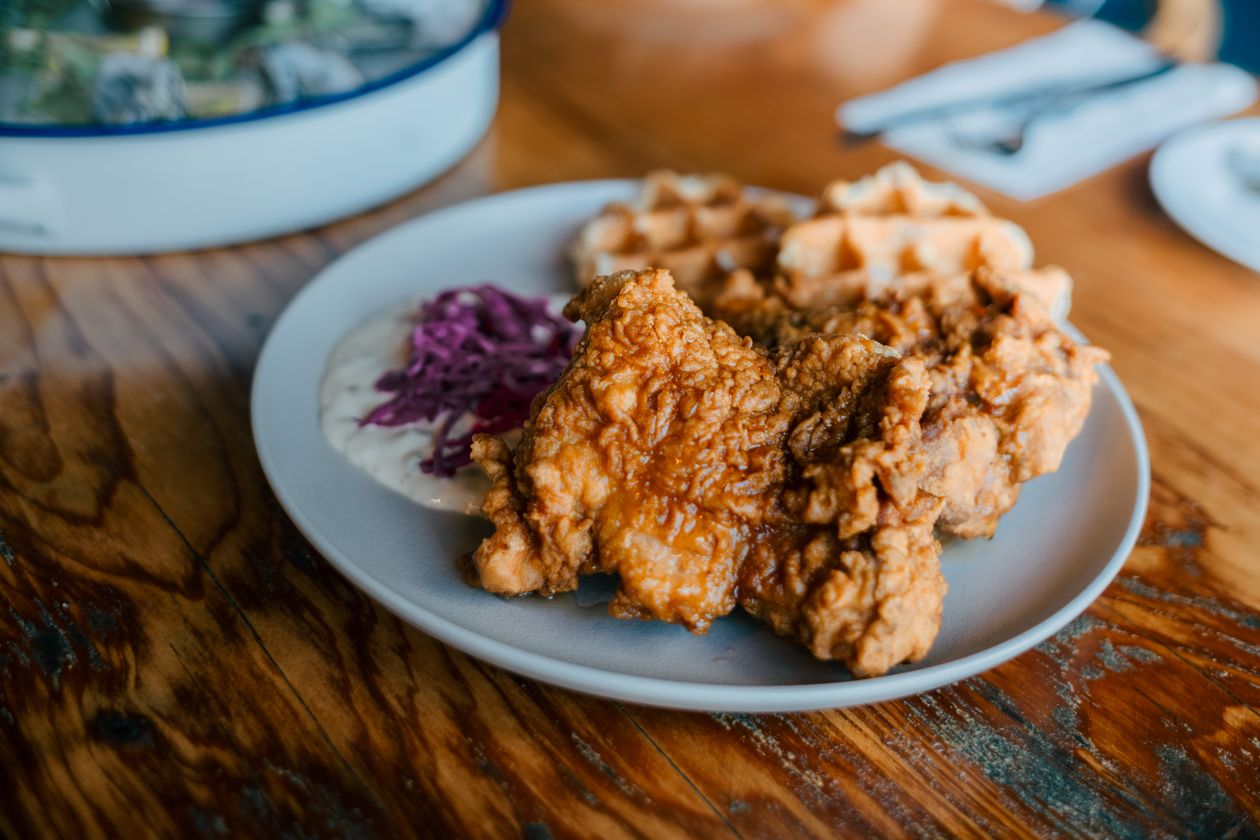
Why these dishes and not others
The classic sides solve the problems of a farm kitchen without refrigeration-era shopping. Peas and beans store dry and cook into protein through the winter. Beets take to pickling, which preserves them and gives the table acid in any season. Okra thrives in Carolina heat when little else wants to grow, and frying it in cornmeal solves its texture for skeptics. Casseroles stretch a modest amount of cheese and egg across a pan of vegetables to feed a crowd. Every dish on the line is an answer to a question about season, storage or numbers at the table.
Reading freshness on a line
Cafeteria food lives or dies on turnover. A busy line at noon is a quality signal in itself, because pans cycle fast and nothing sits. Vegetables should look like themselves: greens dark and glossy, okra crisp-edged, casseroles bubbling at the edges when they come out. Eating at the front edge of the lunch rush, when the pans are freshest and the fried chicken is coming straight off the fryer, is the regular's oldest trick and it still works.
Sweet tea, slaw and the supporting cast
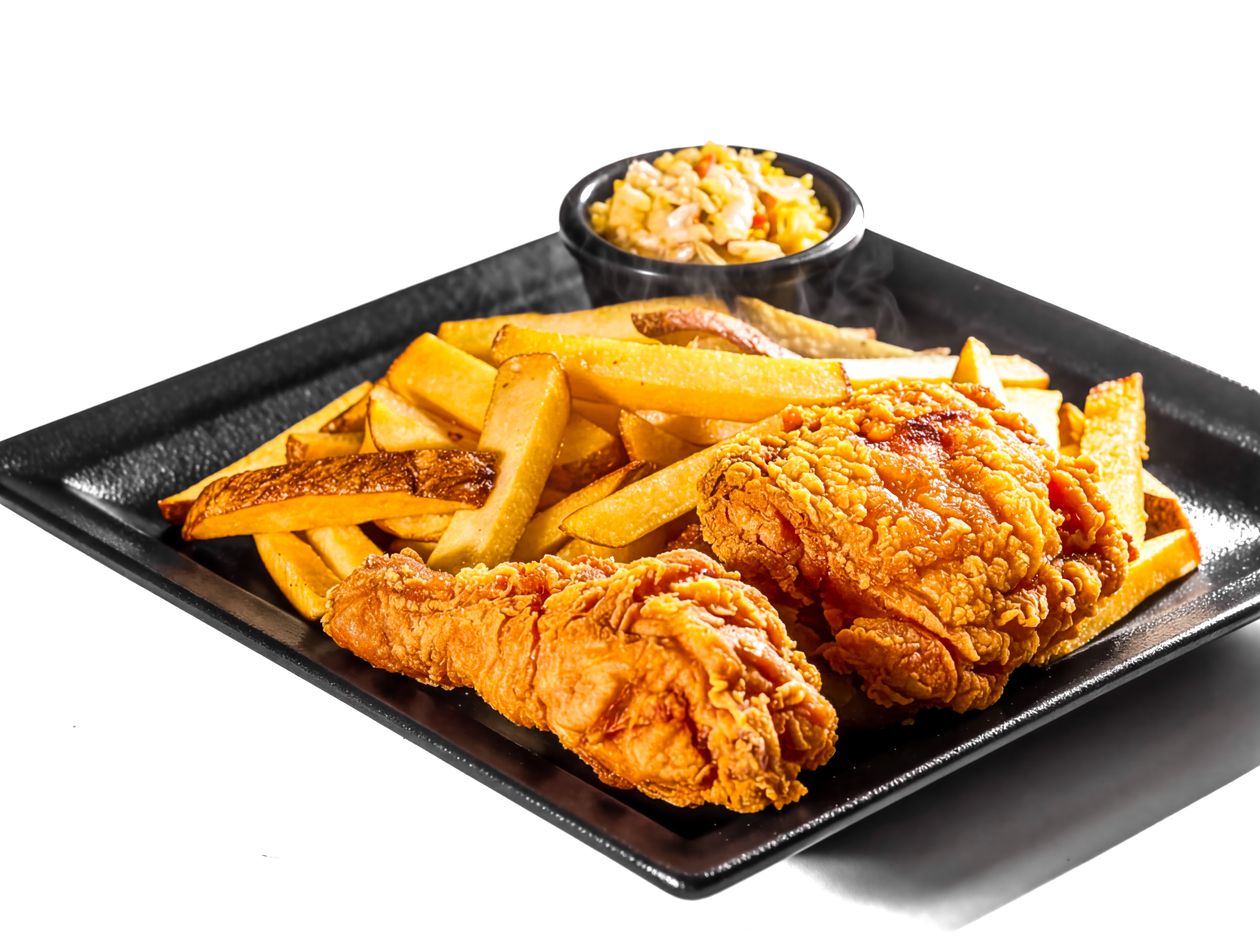
Two more fixtures deserve entries. Coleslaw appears in two dialects, creamy and vinegar-based, and Troutman sits in the part of North Carolina where the vinegar tradition runs strong; either way its job is contrast, a cold, sharp bite against hot fried food. Cornbread and biscuits divide households politely: cornbread, baked in a skillet with a crisp crust, is the pot-liquor sopper, while biscuits are the gravy vehicle and the sandwich bread of the next morning. Neither is a garnish. In this cuisine the bread is structural, the tool the plate's sauces were designed around, and a meal without one of them is missing a working part.
Finally, the desserts belong in any honest glossary because they close the line: peach cobbler, a baked fruit filling under a biscuit-like crust; banana pudding, wafers and bananas layered with custard or pudding and best after a night in the refrigerator; and peach dumplings, the same fruit wrapped and baked. A diner who learns the cast can read any country line in the state at a glance.
Reading a line gets easier with one visit's worth of tasting. Order the side you cannot identify; the portions are modest, the risk is a dollar-sized one, and the staff will happily explain what you are pointing at. Country kitchens are used to feeding people who grew up on this food and people meeting it for the first time at the same table, and the glossary above is really just what the regulars absorbed by eating. A month of Tuesdays will teach it faster than any list.
Common questions
What is the difference between black-eyed peas and other beans?
Black-eyed peas are a field pea, quicker-cooking and earthier than dried beans, with a thin, flavorful cooking liquid. They are a Southern staple in their own right, famous at New Year with greens for luck.
I do not like okra. Should I try it fried?
Yes, once. Most okra dislike is about the slippery texture of boiled okra; cornmeal-fried okra is crisp and mild, closer to a hush puppy in spirit, and converts many skeptics.
Are the vegetables cooked with meat?
Traditionally, yes: greens, beans and peas are usually seasoned with pork. If you eat vegetarian, ask the staff which sides are meat-free that day rather than assuming.
Photos in this guide are representative stock images.
← All guides from Julia's Talley House← Back to Julia's Talley House