Every Southern town argues about fried chicken, and every serious country kitchen in the Carolinas is judged by it first. The dish looks simple, chicken, coating, hot oil, which is exactly why it is hard: there is nowhere to hide. At Julia's Talley House in Troutman, fried chicken is the plate regulars measure everything else against. Here is what separates a memorable piece from a forgettable one, step by step, so you can taste the difference on purpose.
The steps behind a proper piece
- Season the bird, not just the crust. Salt and seasoning need time on the meat itself, ideally hours, so the flavor is in the chicken and not only in the coating.
- Brine or soak. Many Southern kitchens soak chicken in buttermilk, which tenderizes the meat and helps the coating cling. Dry-brining with salt does a similar job with less mess.
- Dredge with a light hand. Seasoned flour, pressed on firmly, then a rest so the coating hydrates and sets. Too thick a dredge makes a gummy jacket; too thin and it slides off in the pan.
- Fry at a steady heat. Oil around 325 to 350 degrees is the working range. Too cool and the crust drinks grease; too hot and the outside burns before the center cooks.
- Rest before serving. A short rest on a rack, never stacked, keeps the crust crisp and lets the juices settle back into the meat.
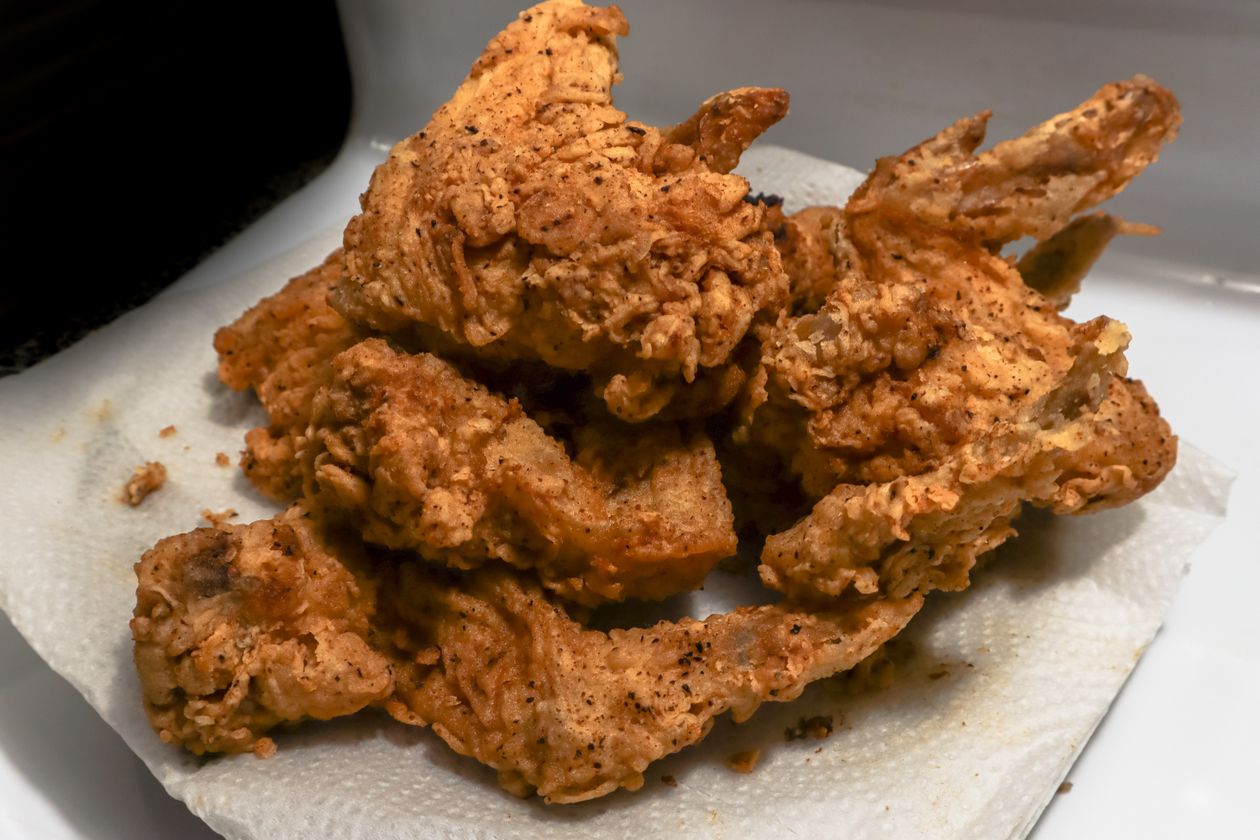
Crust: shattering, not thick
The goal is a crust that cracks audibly and gives way to juicy meat. Craggly edges, the rough bits where dredge clumped slightly, fry into the crispiest parts and are prized accordingly. A heavy, bready shell is the most common failure in mediocre fried chicken; it eats like a coat the chicken is wearing rather than a skin it grew. Color is the visible cue: deep golden brown, evenly, with no pale patches where pieces crowded the pan.
Cast iron and the shallow fry
Traditional Southern frying is a shallow fry in a heavy skillet, often cast iron, with the oil coming partway up the pieces and one turn midway. The heavy pan holds heat steady when cold chicken goes in, which is half the battle. Deep fryers do the job faster in commercial kitchens, and plenty of excellent chicken comes out of them, but the skillet method's slower, attended cooking is the version home cooks are chasing when they try to match a country restaurant's pan.
Dark meat, white meat, honest timing
Thighs and legs forgive; breasts punish. Dark meat stays juicy across a wide window of doneness, which is why mixed baskets please crowds. Breasts cook faster and dry out in the minutes between done and overdone, so a kitchen that serves a juicy breast piece has its timing dialed. When you taste-test a new place, order the breast. It is the piece that tells the truth about the fry cook.
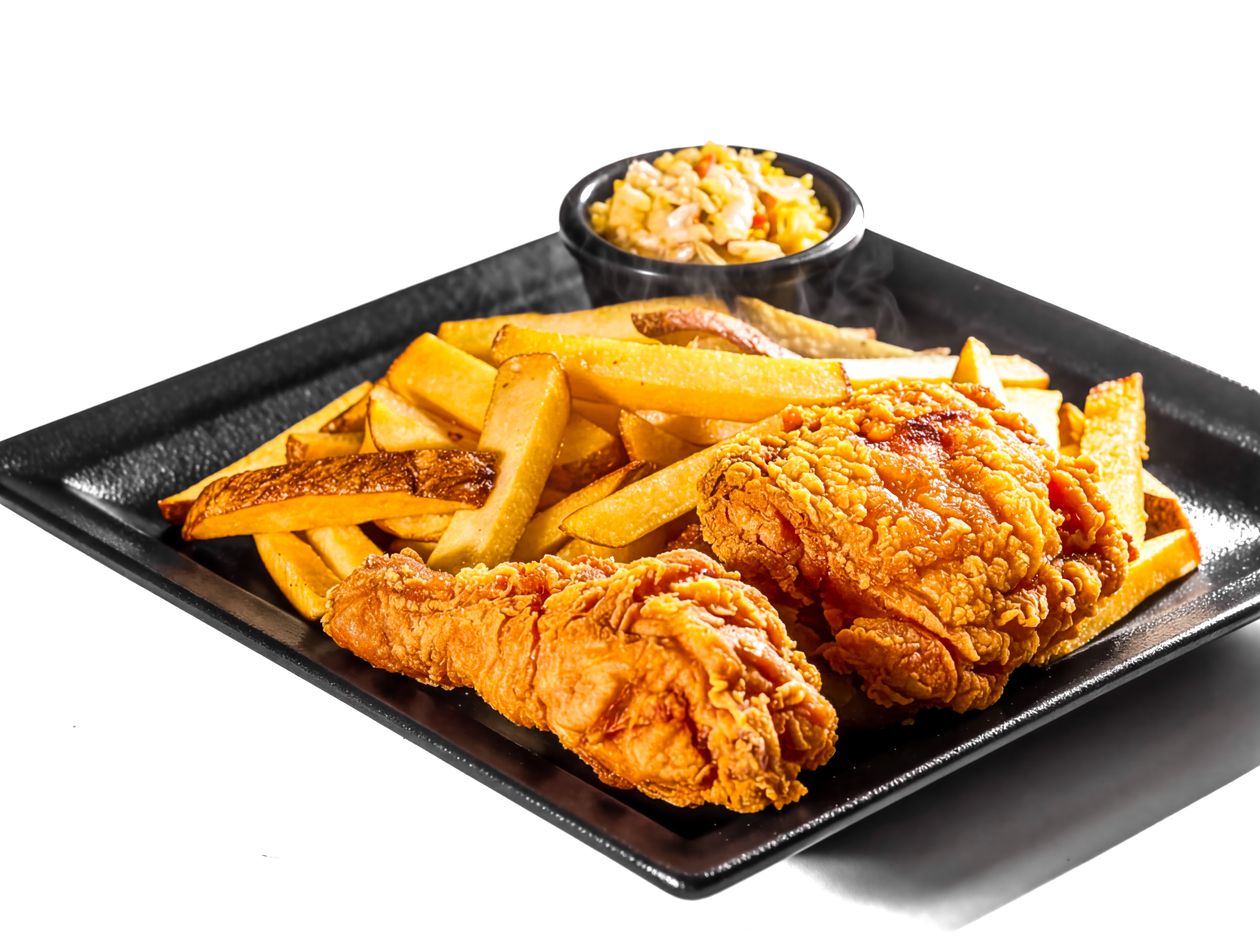
The supporting details: salt, rest and the serving tray
Great fry cooks sweat small calls. The chicken is seasoned again lightly as it comes out of the oil, while the crust is hot enough for salt to stick. Pieces rest on a rack rather than paper alone, so steam escapes instead of softening the bottom crust. In a cafeteria kitchen the holding matters as much as the frying: chicken held under heat lamps dries by the minute, which is why the best pans arrive in small batches timed to the lunch rush rather than one heroic batch at eleven. When you eat at the front of the rush at a busy house, you are tasting the system working as designed, fresh pans cycling, crusts still crackling, meat at its juiciest moment of the day.
Judge a new kitchen on a weekday lunch when the line is moving and the pans are turning over. That is the chicken at its honest best, and it is the standard the regulars are comparing everything to.
Common questions
Why is restaurant fried chicken juicier than mine at home?
Usually the soak and the seasoning time. Restaurants prep chicken hours ahead, so salt and buttermilk do their work. Home cooks who season, soak overnight and fry at a steady temperature close most of the gap.
What temperature should fried chicken reach?
Food-safety guidance is 165 degrees in the thickest part. Many cooks pull dark meat a touch earlier and let the rest carry it there, but 165 is the number to trust at home.
Is fried chicken better the next day?
Cold fried chicken has its defenders and it eats well on a picnic, but the crust softens overnight no matter what you do. Reheating in a hot oven on a rack recovers some of the crunch.
Photos in this guide are representative stock images.
← All guides from Julia's Talley House← Back to Julia's Talley House